


Our skin maintains its ecosystem through various complex organs and tissues that interact closely and influence one another.
Here's a simplified breakdown of the structure:
-
Epidermis: The outer layer of skin that blocks harmful substances
-
Dermis: The layer under the epidermis that gives skin its elasticity and helps protect against germs
-
Under the dermis: Hair grows from hair follicles, and sebaceous glands (oil glands) located along pathways where hair exits the skin
While these tissues are essential, they can cause skin problems due to hormonal influences and other factors. 🥲
Essential 'Sebum' - Overproduction Is the Problem
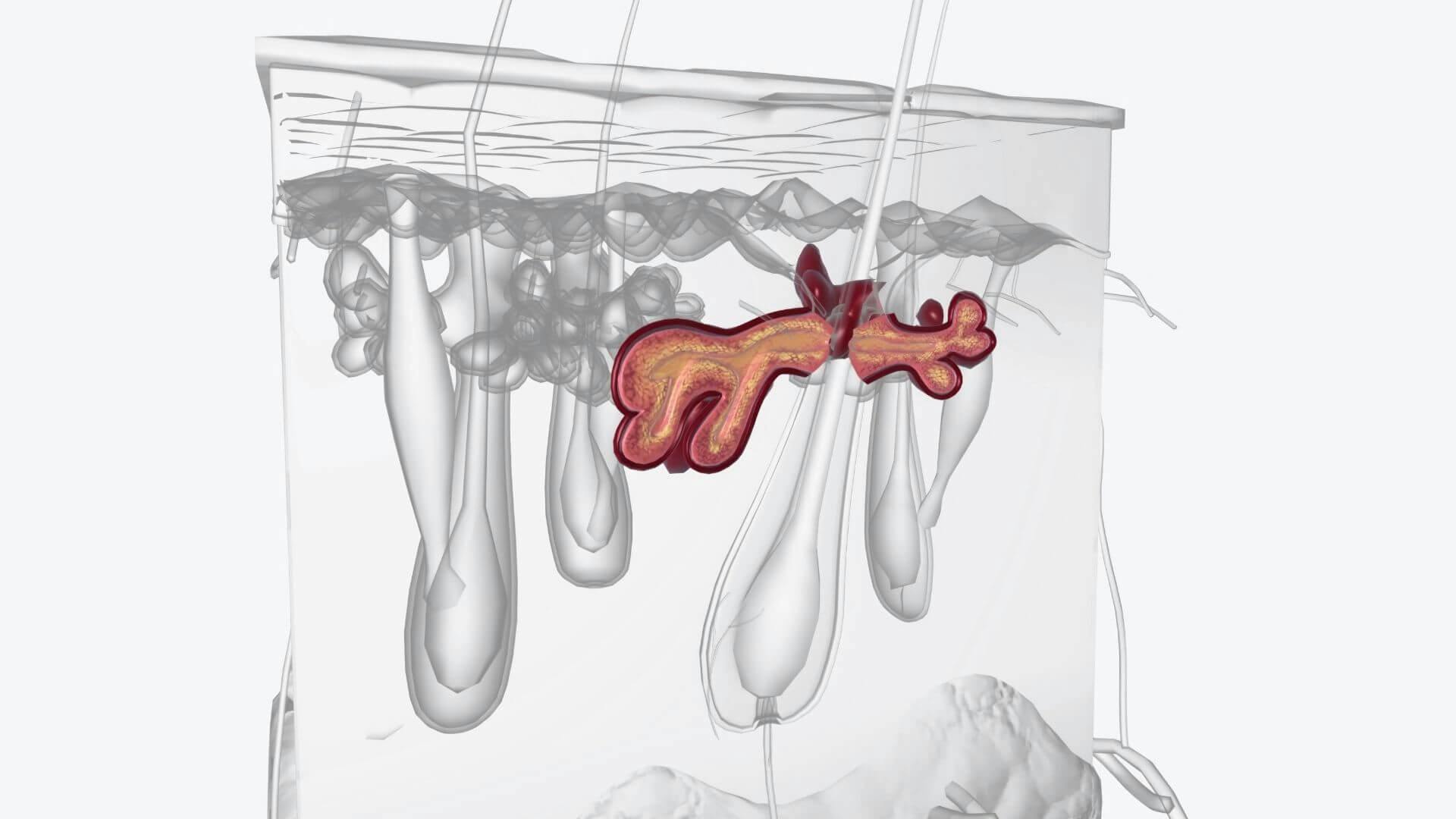
Sebaceous glands make sebum, an oily substance. They are found in most skin areas except the palms, soles, and lips.
Sebum can sometimes feel like unnecessary oil that smells and seems dirty. However, sebum is a significant secretion that creates a chemical protective barrier on the skin surface.
📌 Role of Sebum
Sebum performs the following functions:
-
Prevents skin surface dryness
Sebum coats the skin surface with a thin oil layer, preventing dryness. Without sebum, you might need to apply cream all over your body three times daily, like you would with meals.
-
Inhibits bacterial growth
Sebum is slightly acidic, which stops certain bacteria from growing. If sebum doesn’t work properly, skin infections like folliculitis can spread quickly. 🚨
However, these sebaceous glands can dramatically increase or decrease secretion in response to androgens—meaning hormones influence them.
That's why teenagers during puberty often experience sudden increases in sebum production, which can cause skin troubles—namely, acne.
📌 Complex Causes of Acne
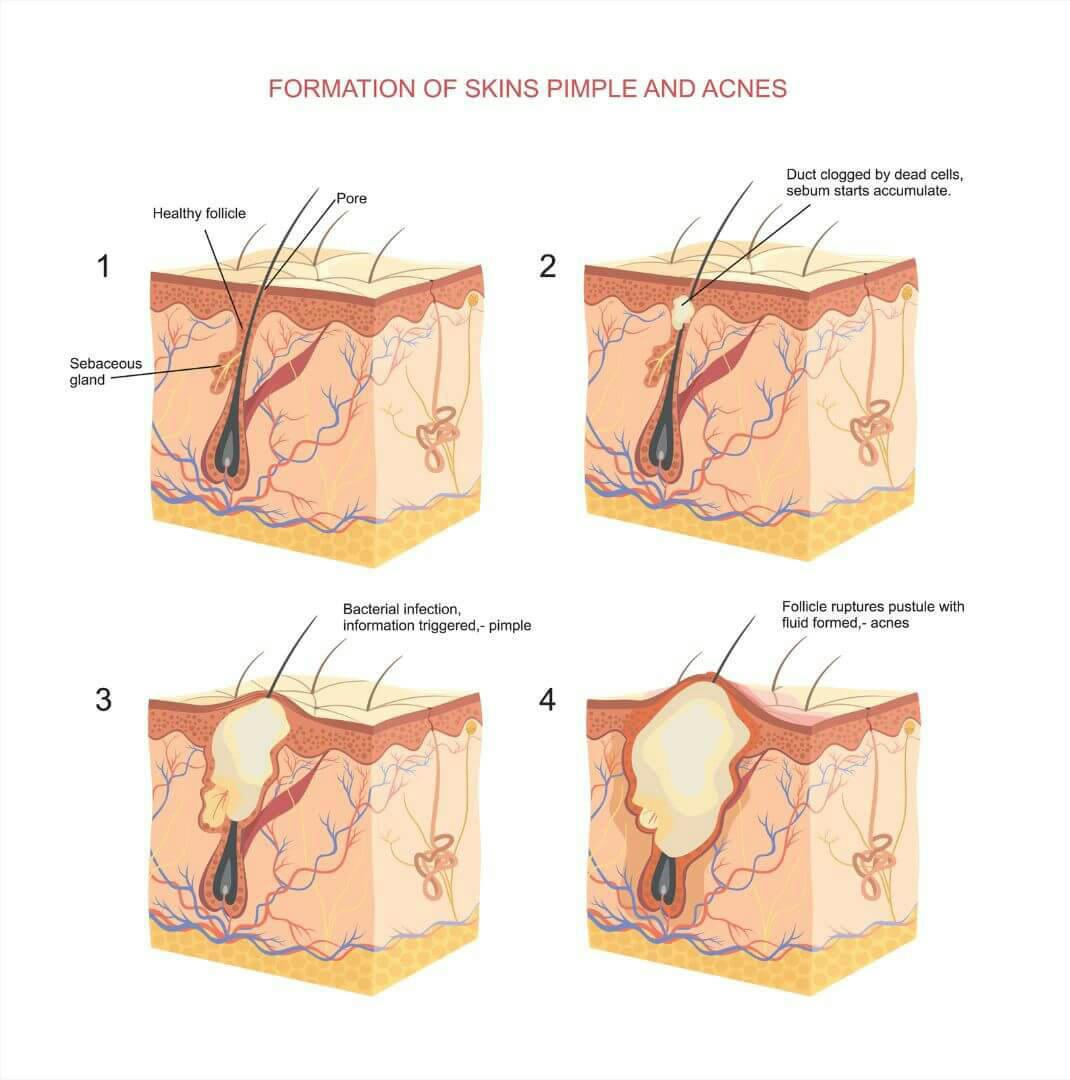
Of course, acne doesn't develop simply from excessive sebum production.
Complex causes work together, including the active presence of acne bacteria and delayed keratin shedding cycles. However, treatment methods are surprisingly straightforward, condensing into just a few approaches.
Acne Treatment: Here Are Your Options!
How far have you explored acne treatment?
Let me introduce several Western and Korean medicine treatment methods. 🤗
📌 Sebum Suppression Medication
The representative medication is Roaccutane, containing Isotretinoin, which suppresses sebum production.
In Korea, 'Isotinone'—a medication that targets the sebaceous glands that produce sebum—is well-known. While fast and effective, because it's a vitamin A derivative, It is not allowed for women who might become pregnant because it is risky.
Such medication interferes with sebaceous gland function to produce rapid effects but can also cause dryness throughout the body.
📌 PDT (Photodynamic Therapy)
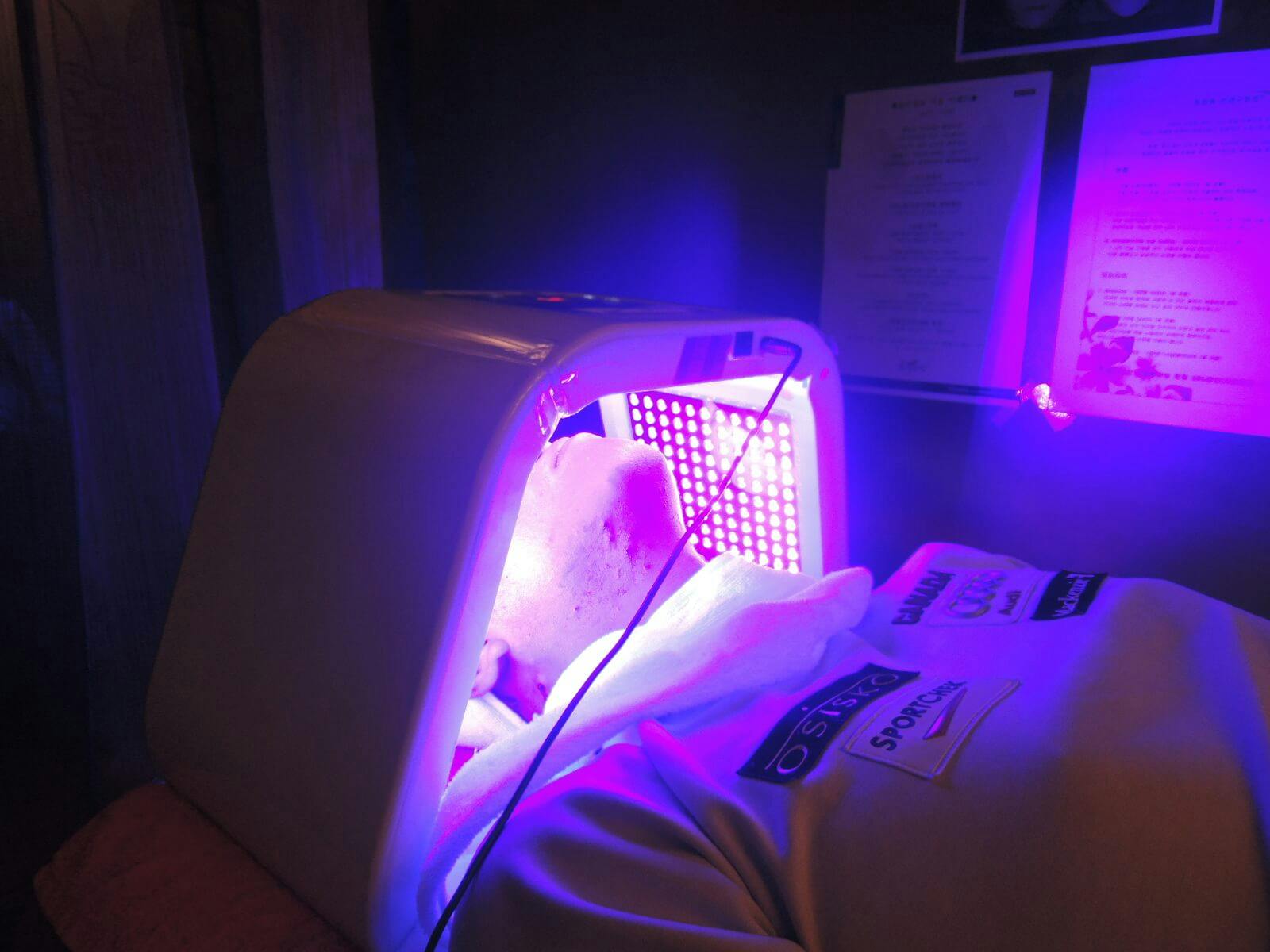
Some medications react to light. When exposed to certain wavelengths, they produce oxygen, which kills acne bacteria that cannot survive in oxygen.
However, it is not as effective as Isotretinoin. It also needs several treatments applied carefully to reduce inflammation.
📌 Riddle Shot Principle: Korean Medicine Hwa-an Care
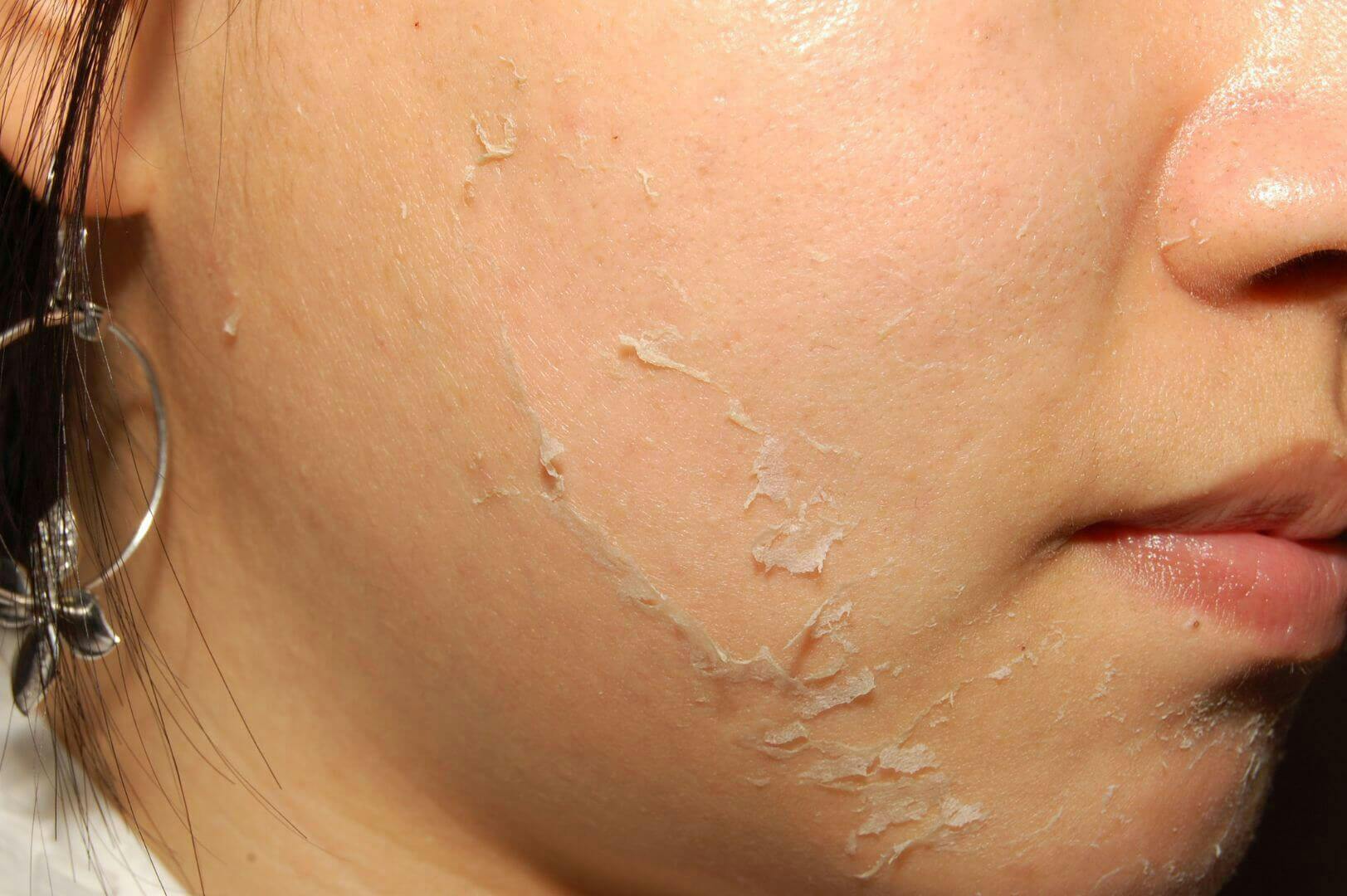
Unlike chemical peels, which only shed keratin, Hwa-an Care is the micro-needle peeling treatment provides physical stimulation to the skin's epidermal layer.
Recently, a product called Riddle Shot has gained popularity among younger people. It is a popular K-beauty product that uses micro-needles to create tiny channels in the skin, which helps other skincare ingredients absorb better. Essentially, it is a mild at-home version of Hwa-an Care. 😉
Hwa-an Care activates the skin's self-healing mechanism, helping damaged dermal and epidermal tissue be replaced more quickly. It has the advantage of no side effects, like chemical dependence or hormonal changes, and works evenly for most patients.
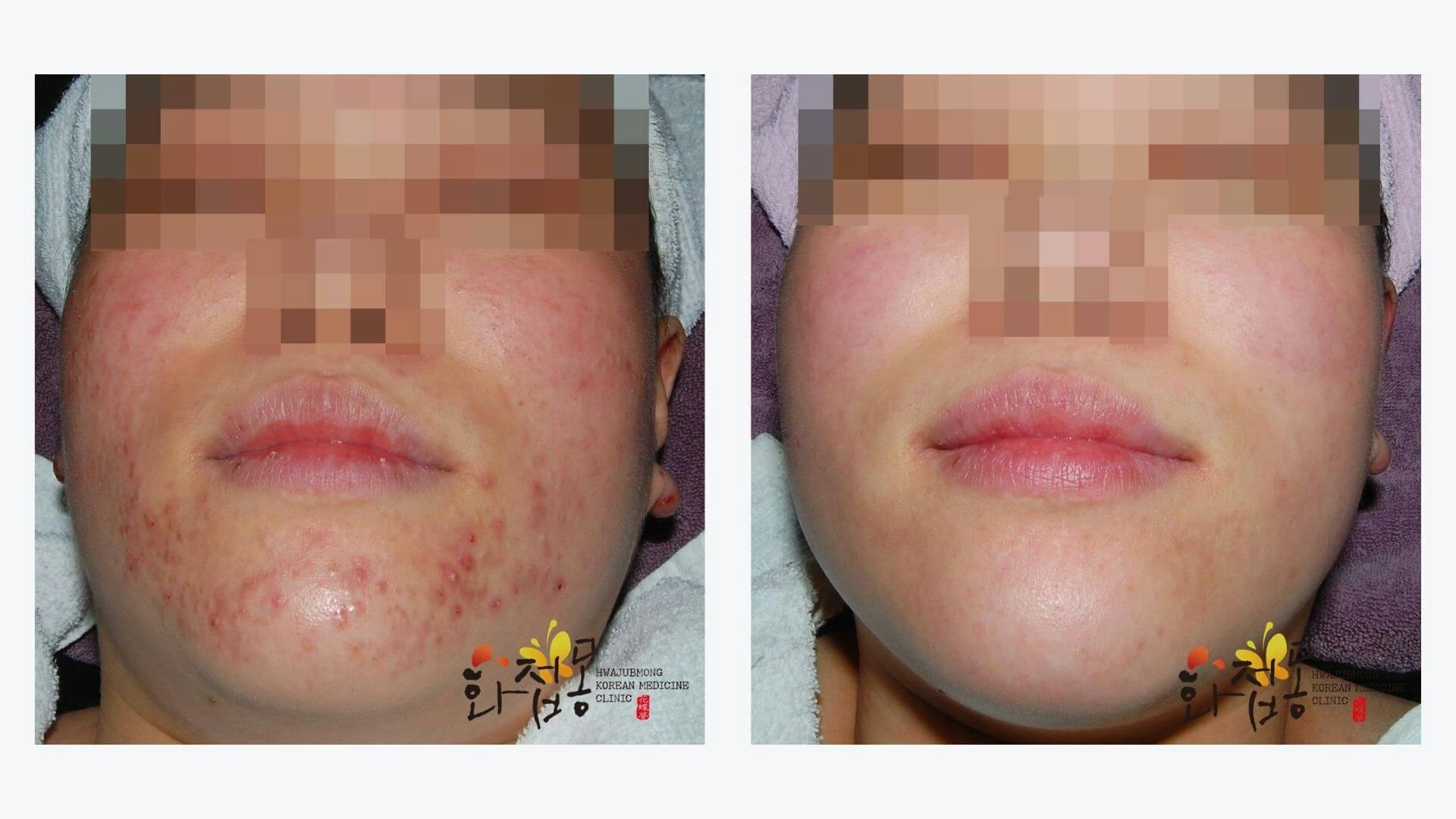
Hwajubmong Korean Medicine Clinic has been solving countless patients' acne and acne scar concerns through Hwa-an Care since 2007. Our clinic's proceeds in these stages:
-
Patient skin cleansing → The Director extracts the patient's inflammation and acne → Hwa-an Care follows
As this process repeats every two weeks, skin rapidly recovers damaged tissue and replaces it with new skin.
This care doesn't simply treat acne—it promotes the recovery of damaged skin. Therefore, it can help treat various skin concerns and is used in cosmetic treatments, turning dull or uneven skin into clear, radiant skin. 😉
=
Many people worry about skin problems, especially acne.
If you're considering various treatment methods, consider Korean medicine treatment too.
Korean medicine clinics offer customized treatment considering individual constitution and condition, helping treat acne from adolescence through adulthood. In fact, many Koreans visit Korean medicine clinics to manage acne effectively. 🤗
I hope you find this article helpful and achieve clear, healthy skin through consistent care! 🌟
-
Author: Dr. Oh Chul, HJM Clinic
-
Editor : Sia


